
How it works
The short version: bikes hold chains, chains count kilometres, and you tap a button when you've treated one. Everything else is detail.
Getting started
Three steps and you're running. You can read the rest of this page later, or never.
Add your bikes
Tap + next to "My bikes". If you're on Strava, import them — those bikes count ride distance on their own, the moment a ride uploads. Otherwise add one by hand and type the distances in yourself. Every new bike arrives with one chain already fitted, so there's nothing else to set up.
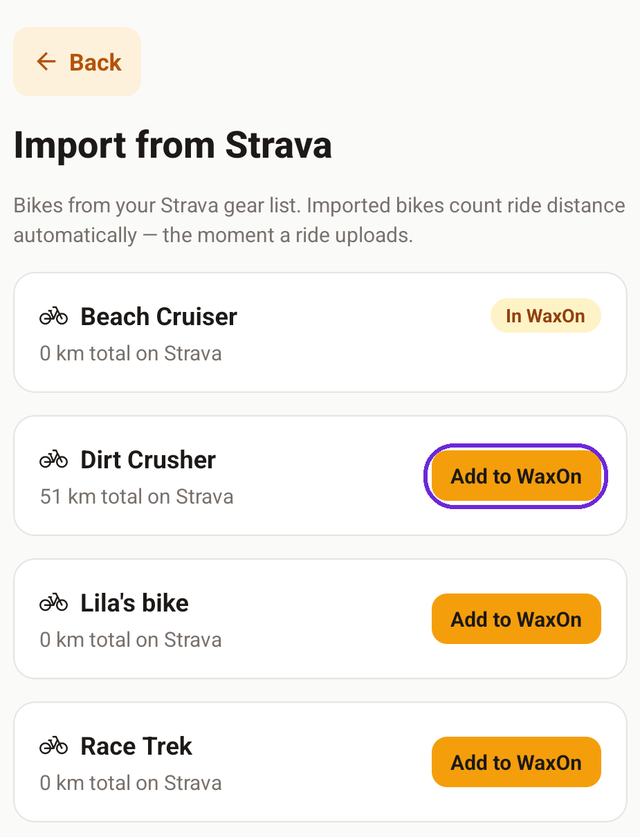
Ride
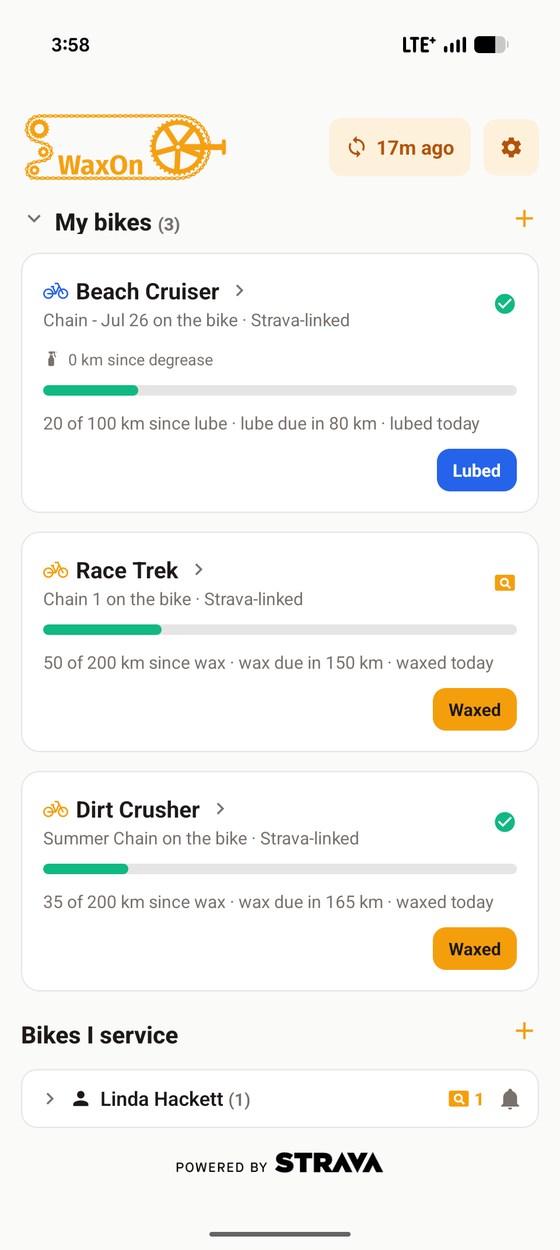
The dashboard is the whole app on one screen: a card per bike, a bar showing how far through its chain's interval you are, and a line of text spelling out the same thing in numbers. Nothing to do here — it just fills up as you ride.
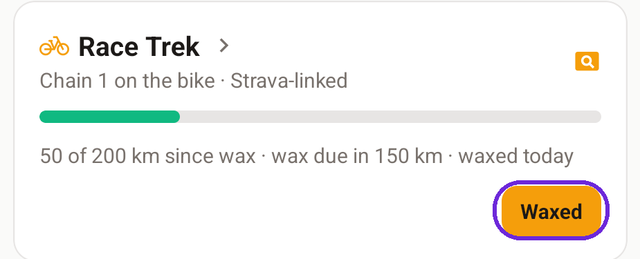
Tap Waxed when you've done the job
That's the loop. The counter drops to zero, the clock restarts, and the entry goes into that bike's history with your name on it. The button says Lubed instead if the fitted chain is an oiled one — it follows the chain, so you never have to think about which you're logging.
Genuinely, that's it. When you want more, the two things worth turning on are service reminders and sharing a bike with whoever else touches it.
Look it up
Every symbol, screen and job in the app. Pick the one your question is about.
Reading a screen at a glance
WaxOn leans on a small set of symbols so you can read a screen without reading sentences. Here's a dashboard with most of them on it at once.
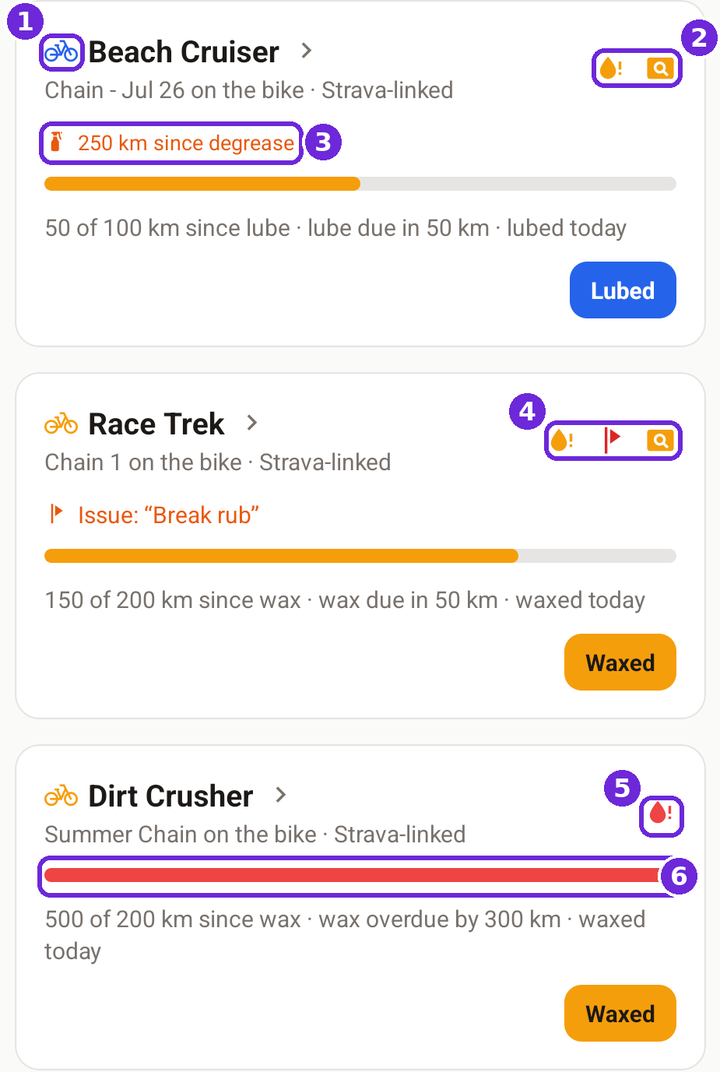
- The bike icon is colour-coded. Blue means the chain currently fitted is oiled, amber means waxed, grey means no chain on the bike.
- Status symbols sit top-right. A droplet with an exclamation is wax or oil due; the magnifier is a service reminder that's come up.
- The degrease line only appears when it matters. It counts kilometres ridden on an oiled chain, because those are the ones that dirty a drivetrain.
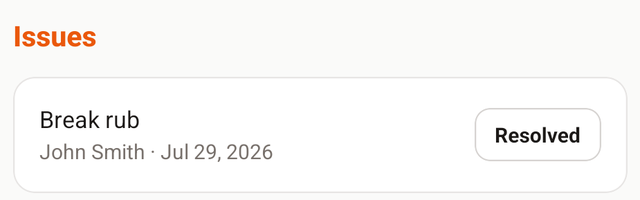
- A red flag means somebody reported a problem. The note itself is printed underneath — here, "Break rub".
- Colour is the urgency. Amber for due soon, orange for due, red for overdue. This bike is well past.
- The bar is the chain's interval. It fills as you ride and turns red once you're over.
The symbols
The full set, including the few that only turn up on a bike screen.
The colour tells you how bad it is: amber for due soon, orange for due, red for overdue. On a person's row it also carries a number — how many of their bikes are in that state.
Only shows when everything is clear: chain fine, no issues flagged, no reminders due. If any one of those isn't true, you get that symbol instead.
An issue someone flagged on that bike: "rode through rain", "shifting's off". It sticks around until someone marks it resolved.
Brake pads, tyre wear, tubeless sealant or a battery check has hit the distance you set for it.
Blue when the chain currently on that bike is oiled, amber when it's waxed, grey when there's no chain fitted. Same colour language as the buttons.
Every chain gets a card with a drop beside its name: amber if it's waxed, blue if it's oiled. One chain is "On the bike", the rest are "On the shelf" and don't collect distance. The drop grows an exclamation mark once that chain needs doing.
Its own counter, because degreasing is its own job. It only ticks up while an oiled chain is fitted — wax doesn't contaminate a drivetrain, so those kilometres don't dirty it.
Anything to do with letting someone else help: the share button, your list of service people, the screen you land on after scanning a code.
On each person in "Bikes I service". Muted means their bikes stop sending you notifications. You still see every symbol on their cards — it just goes quiet.
Two little chips
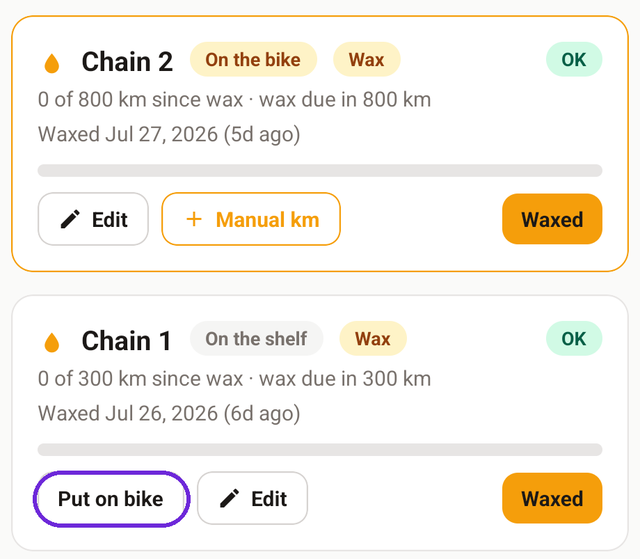
On a chain card you'll see On the bike or On the shelf, and next to it either Wax or Oil. The first says whether it's collecting distance; the second says what it's treated with.
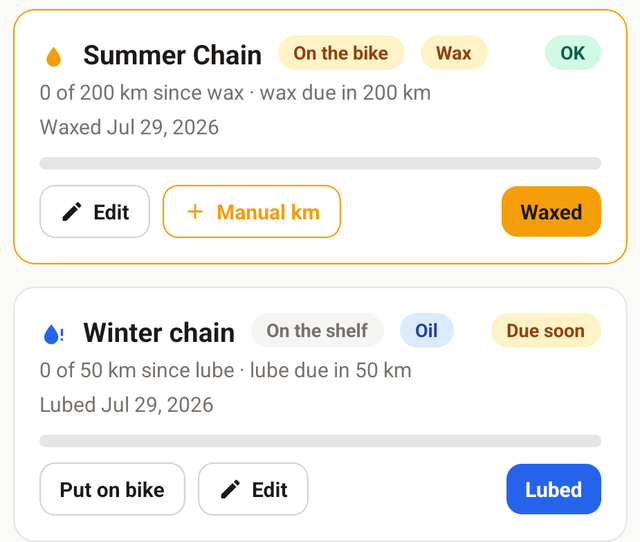
How a chain card reads
The bar and the badge say the same thing twice, so you can take it in either way round.
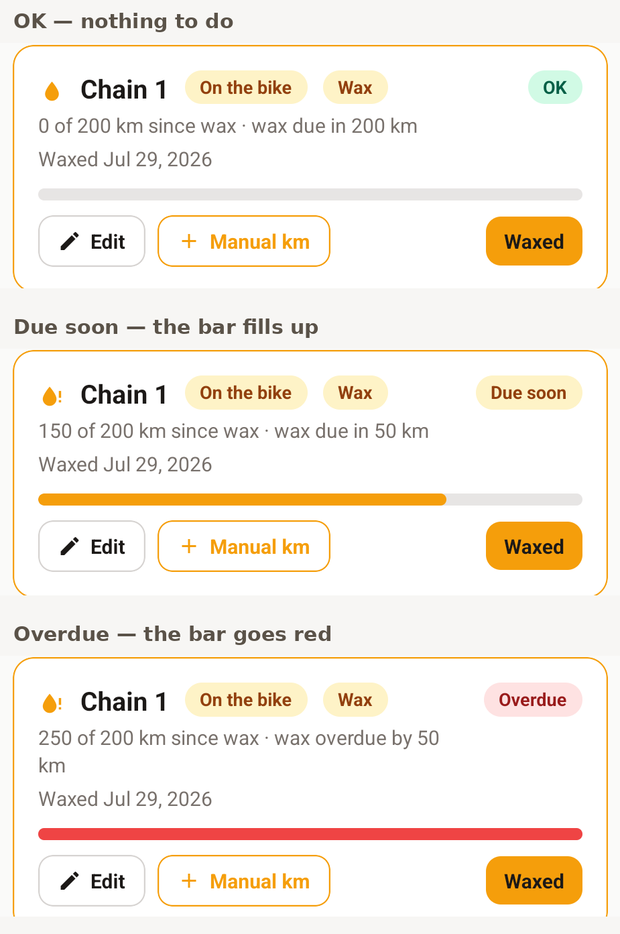
Log a wax or a lube
- Tap Waxed (or Lubed — the button follows the chain).
- Pick which product you used, if you've saved presets — optional. Choosing one sets the chain's next interval to whatever that product lasts. If you've marked a default for that type it starts selected; tap the selected one again to clear it.
- Add a note if you want. "Second dunk", "did it in the rain", whatever you'll want to read in three months.
- Save. The counter goes back to zero and the clock restarts.
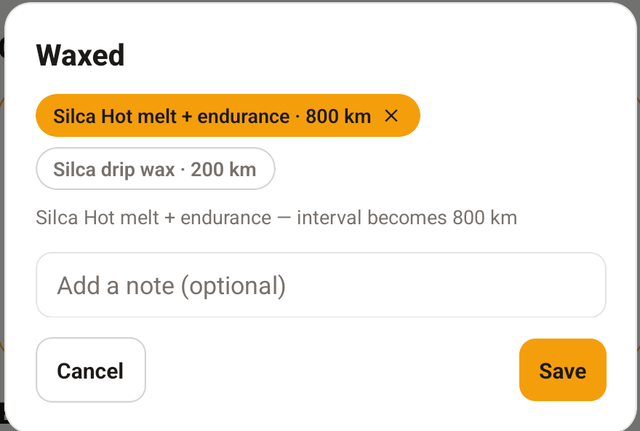
A line under the products always says what Save will do, so you never have to guess: either the product you picked and the interval it brings, or "keeps this chain's interval". Skipping the pick is a perfectly normal thing to do — the wax just goes into the history untyped.
Save your waxes and lubes as presets
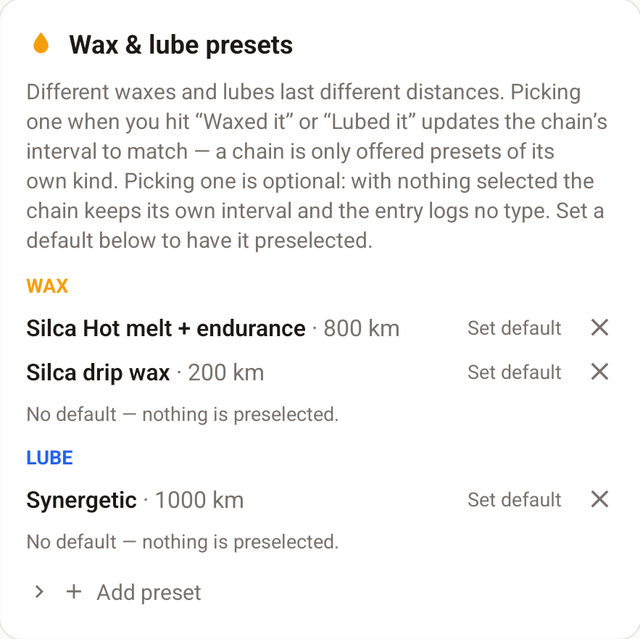
Settings → Wax & lube presets. Give it a name, say whether it's a wax or a lube, and how far it lasts. A waxed chain is only ever offered wax presets, an oiled one only lubes — so the list stays short and you can't pick the wrong thing by accident.
You can mark one wax and one lube as the default, and that one starts selected next time. Nothing becomes the default on its own; the group reads "No default" until you set one, and tapping the DEFAULT badge clears it again.
Add distance by hand
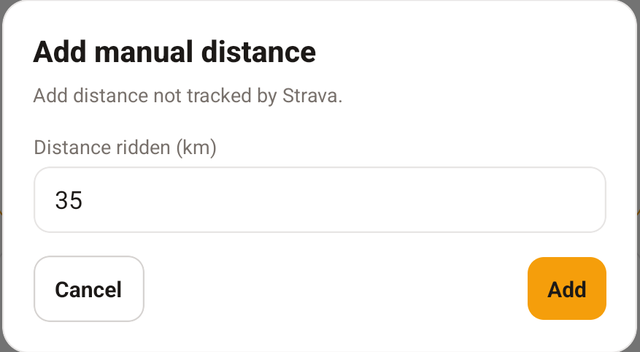
Bikes that aren't linked to Strava get a + Manual km button on the chain that's fitted. Type the distance, tap Add, done.
Stop indoor rides counting
Strava puts your default bike on any ride that arrives without gear. So a gym session that uploads as a ride — a Keiser M Series spin bike, say — lands its distance on a real chain and drags the wax date forward for riding that never touched the bike.
Bike settings → Strava sync → Count indoor distance. It's on to begin with. Turn it off and WaxOn ignores anything Strava marks as indoor or virtual — the trainer flag, or a Zwift-shaped VirtualRide.
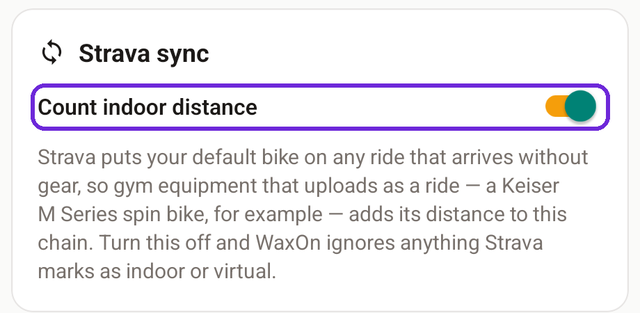
The switch is per bike, deliberately, and only shows up on a Strava-linked one. A real bike on a turbo trainer uploads as a trainer ride too, and those kilometres genuinely wear its chain — so leave it on for that bike.
Turning it off reaches backwards as well as forwards: indoor rides counted on that bike in the last two days come off at the next sync. Anything older stays where it is.
Rotate chains
Add as many chains as you run. Put on bike moves one out of the shelf and into service; the one it replaces stops counting.
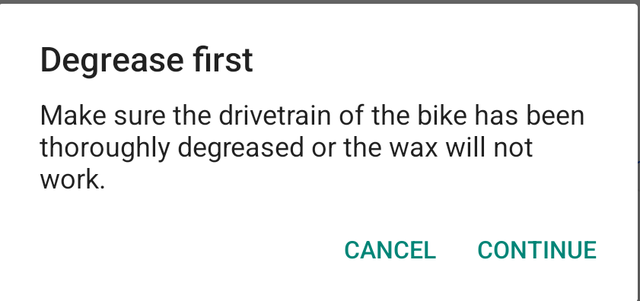
If you're putting a waxed chain onto a bike that's been running an oiled one, WaxOn stops to remind you to degrease first — wax won't bond to a contaminated drivetrain. You can turn that warning off in Settings once you're tired of it.
Edit a chain
Edit on a chain card opens its name, the Oiled ⟷ Waxed toggle, how far it should go between treatments, and how much warning you want beforehand. It opens in place, under the card's own buttons — Close where Edit was.
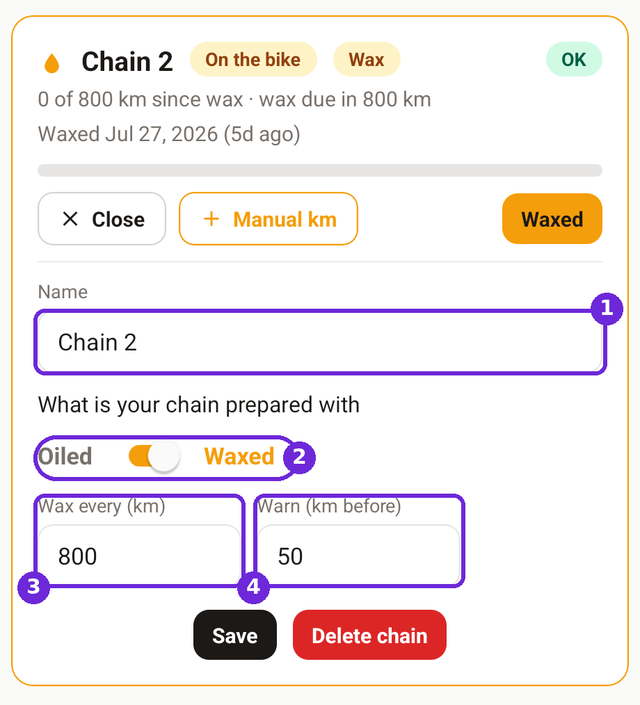
- The name. "Summer chain", "Chain 2" — whatever tells them apart on the shelf.
- Oiled or waxed. Flipping it changes which presets that chain is offered, and the colour of its drop everywhere else.
- How far between treatments. The number the progress bar fills towards. Picking a preset when you log a wax overwrites this with whatever that product lasts.
- How much warning. How far ahead of the interval you want the amber "due soon" — 50 km here.
Delete chain lives in here too, next to Save — worth knowing before you go looking for it elsewhere.
Set up service reminders
Bike settings → Service reminders. Switch on brake pads, tyre wear, tubeless sealant or battery check and give each one a distance. They count that bike's total riding, not a single chain.
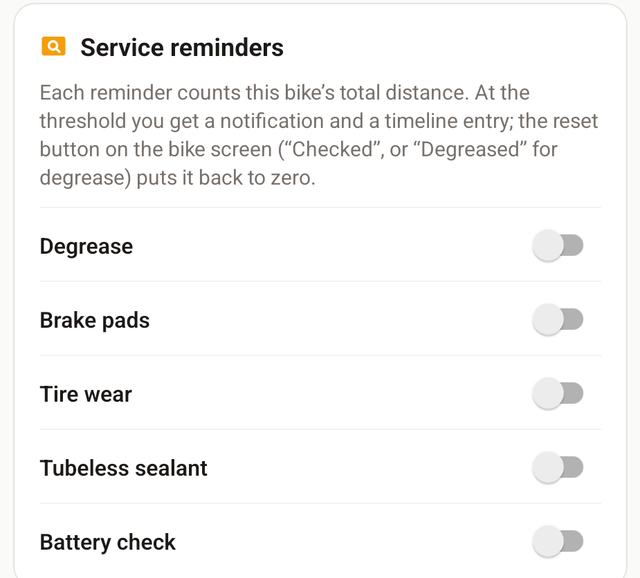
When one comes due you get a notification and a line in the history, and it turns red on the bike screen. Checked puts it back to zero.
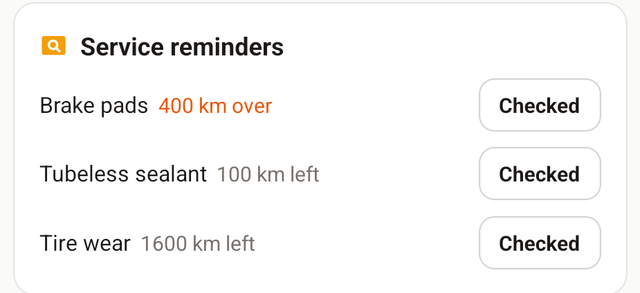
Degrease works the same way but has its own card, since it only counts oiled kilometres.
Flag a problem
Flag an issue near the top of a bike screen. Short note, that's it.
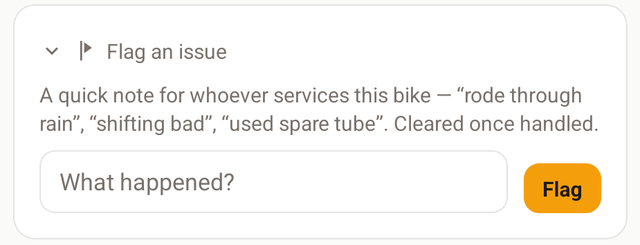
It shows as a red flag anywhere that bike appears, including for whoever else has access, until someone hits Resolved.
Share a bike with someone
- Share in the bike's top row, or bike settings.
- Create share code — you get a six-character code and a QR.
- They scan it with their phone camera, or type the code into the + under "Bikes I service".
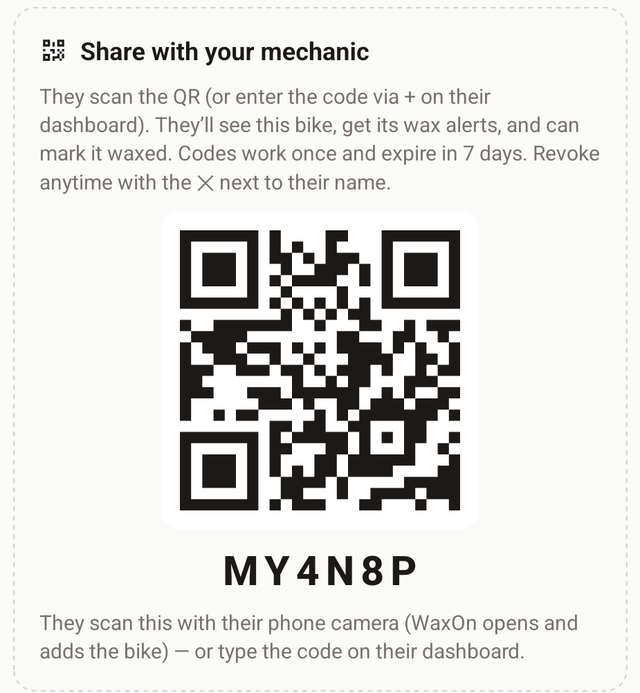
Codes work once and expire after seven days. From then on they see that bike, get its alerts, and can log work on it. Anything they do is recorded with their name. Remove them any time with the ✕ next to their name in bike settings.
Look after someone else's bikes
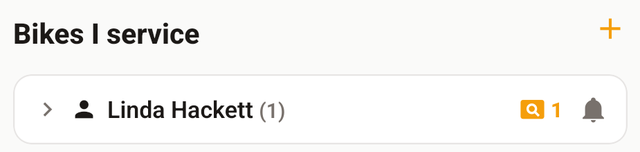
Shared bikes live under "Bikes I service", grouped by person. Each name tallies what's going on across their bikes, so you can tell at a glance whether anything needs you before you open anything. If one person is noisier than you'd like, tap the bell on their row to mute their notifications.
Read (and fix) the history
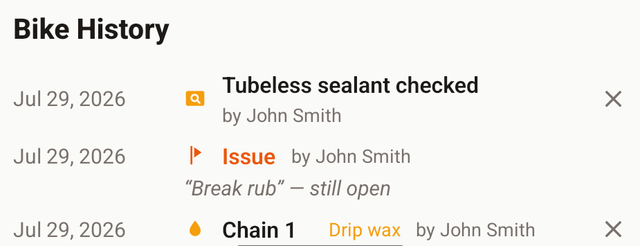
Every bike keeps a timeline: waxes, degreases, reminder checks, flags. Each entry says who did it and at what distance. Logged something by mistake? The ✕ removes it — and if it was the most recent one, the counter it reset is put back where it was.
Kilometres or miles
Settings → Distance Unit. It only changes what you see; everything is stored in kilometres underneath. That's deliberate — it means you and a friend can share a bike while reading different units and neither of you sees the wrong number.
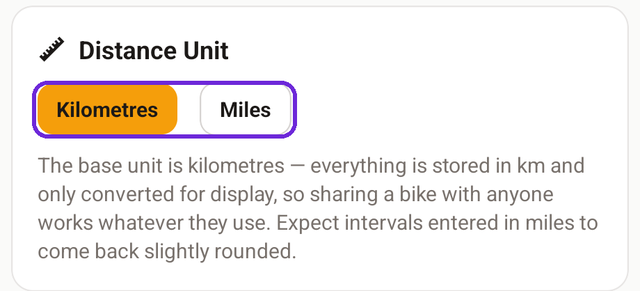
One catch: an interval you type in miles is converted before it's stored, so it can come back a mile or so rounded.
About the notifications
WaxOn works out how fast you're getting through a chain's interval and schedules its warnings from that, so alerts arrive even when the app's closed. Ride more, they move closer; take a week off, they slide out. Chains sitting on the shelf never alert.
Still stuck?
Email [email protected] and describe what you were doing. Screenshots help a lot.